Dandiya Delight Dance: India's Premier Gujarati Folk Dance Rhythm Game
🎉 Dandiya Delight Dance is not merely a mobile game in India's thriving digital entertainment landscape—it is a groundbreaking cultural preservation initiative that brings the vibrancy of Gujarat's iconic Garba and Dandiya Raas folk traditions to over 15 million players across India and the global Gujarati diaspora. Launched on 25th September 2022 (timed to coincide with Navratri, Gujarat's most sacred festival) by Daman Games, one of India's leading indie game development studios with a focus on cultural heritage, Dandiya Delight Dance has redefined what folk-centric gaming can achieve in India. This exceptional game seamlessly blends the traditional stick dance movements, rhythmic patterns, and festive music of Gujarat with modern mobile gameplay mechanics that resonate with Gen Z gamers, millennials, and traditional folk dance enthusiasts alike.
Rooted in the ageless traditions of Gujarat's Navratri celebrations—where communities gather for nine nights to honor Goddess Durga through dance and devotion—Dandiya Delight Dance captures the essence of both Garba (the circular devotional dance) and Dandiya Raas (the energetic stick dance) that form the heart of Gujarati cultural identity. Unlike generic rhythm games that rely on Western pop music and abstract visuals, Dandiya Delight Dance stays authentic to Gujarat's folk traditions, working closely with master folk artists from Saurashtra, Kutch, and North Gujarat to ensure every dance movement, every rhythmic pattern, and every musical composition remains true to the cultural roots of Dandiya and Garba. What makes Dandiya Delight Dance truly unique is its ability to balance cultural authenticity with mass appeal, making it accessible to urban Indian youth with limited exposure to folk traditions while satisfying purists who value the integrity of Gujarat's dance heritage.
In a country where Western gaming franchises dominate the mobile market, Dandiya Delight Dance stands out as a proudly Indian creation that celebrates local culture without compromising on gameplay quality or technical innovation. The game has become a cultural phenomenon during Navratri celebrations across India, with community centers, schools, and even corporate offices organizing Dandiya Delight Dance tournaments alongside traditional live Dandiya events. For the global Gujarati diaspora—spread across the USA, UK, Canada, Australia, and East Africa—Dandiya Delight Dance serves as a vital link to their cultural roots, allowing second and third-generation NRIs to connect with the traditions of their ancestors through an interactive, engaging medium that speaks their digital language.
1. Game Overview: Dandiya Delight Dance in Context
Dandiya Delight Dance is a culturally immersive rhythm mobile game developed and published by Daman Games, with its primary development hub in Ahmedabad (Gujarat) and a satellite studio in Mumbai dedicated to technical implementation. Released on 25th September 2022—just days before the start of Navratri that year—the game was conceptualized as a digital bridge between Gujarat's rich folk dance heritage and India's 750 million+ mobile gamers, a demographic that is increasingly disconnected from traditional cultural practices due to urbanization and globalization.
The genesis of Dandiya Delight Dance can be traced to a 2021 initiative by the Government of Gujarat's Tourism Department, which sought innovative ways to promote Gujarati culture among young Indians and international tourists. Daman Games, already recognized for their culturally sensitive game development with titles like Sattriya Sparkle Step, won the competitive tender to create a game that would both entertain and educate players about Garba and Dandiya Raas. The development team worked closely with the Gujarat State Sangeet Natak Akademi, folk dance scholars from Gujarat University, and master Dandiya performers from across the state to ensure that Dandiya Delight Dance would be a faithful representation of Gujarat's cultural heritage, not just a commercial game with superficial folk elements.
The core narrative of Dandiya Delight Dance follows Priya, a young Gujarati-American NRI who visits her ancestral village in Saurashtra during Navratri. Initially unfamiliar with her cultural roots, Priya learns the art of Dandiya and Garba from her grandmother, a master folk dancer, and ultimately participates in the village's prestigious Navratri Mahotsav competition. Players guide Priya (and unlockable characters including male Dandiya performers, village elders, and professional folk artists) through progressive levels that correspond to the traditional learning stages of Dandiya Raas: from basic stick movements (chaal) to complex choreographed patterns (raas) and full Garba performances around the sacred garbi (earthen pot with lamp).
Dandiya Delight Dance is available in 12 Indian languages (including Gujarati, Hindi, English, Marathi, Tamil, Telugu, Bengali, Punjabi, and Rajasthani) as well as English, Spanish, and Arabic to cater to the global Gujarati diaspora. The game follows a freemium model—free to download and play basic levels that teach foundational Dandiya movements, with optional in-app purchases for advanced dance modules, virtual traditional costumes (including chaniya cholis with intricate mirror work from Kutch, kediyu for male performers, and odhni veils), and premium educational content featuring masterclasses with legendary Dandiya performers. Notably, 15% of all in-app purchase revenue is directed to the Gujarat Folk Arts Preservation Trust, which supports elderly folk artists and funds Dandiya training programs for underprivileged children across Gujarat.
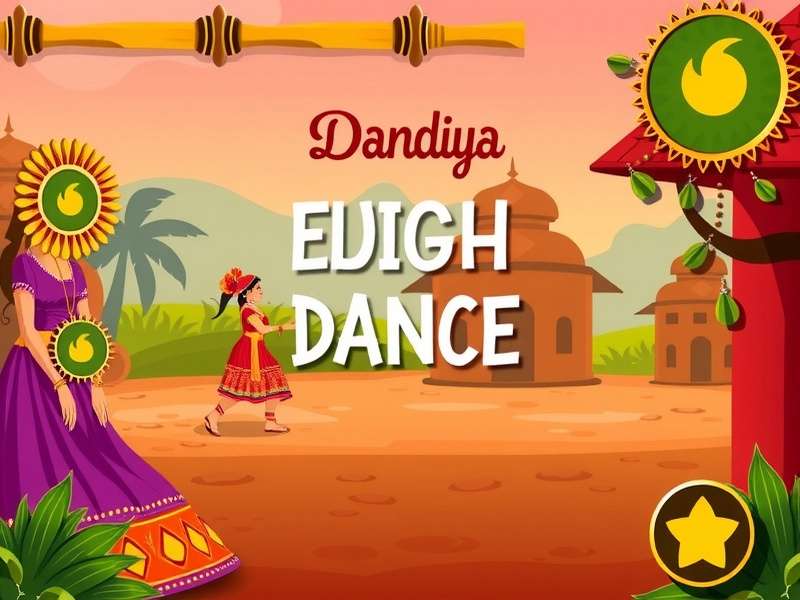
Beyond its entertainment value, Dandiya Delight Dance serves as a comprehensive educational tool for Gujarati folk traditions, featuring a dedicated Gurukul section with video tutorials from eminent folk artists, detailed explanations of Dandiya and Garba's historical origins, and interactive guides to the meaning behind different dance movements and musical rhythms. This educational component has made Dandiya Delight Dance popular in schools across Gujarat and among Gujarati community organizations worldwide, who use the game to teach young people about their cultural heritage in an engaging, interactive way that complements traditional teaching methods.
One of the most innovative features of Dandiya Delight Dance is its "Regional Styles Mode," which allows players to explore the distinct variations of Dandiya and Garba from different regions of Gujarat—each with unique movements, music, and cultural significance:
- Saurashtra Style 🕌: Emphasizes fast, energetic stick movements and circular formations, with gameplay featuring quick reflex challenges and synchronized group dance patterns characteristic of the Saurashtra peninsula's vibrant folk traditions
- Kutch Style 🏜️: Incorporates elements of Garba-Raas from the Kutch region, featuring slower, more graceful movements, intricate hand gestures, and musical accompaniment from traditional dhol and manjira
- North Gujarat Style 🎶: Blends Dandiya with elements of Hudo and Raas from the Mehsana and Patan districts, featuring complex footwork patterns and rhythmic variations that reflect the region's agricultural heritage
- Urban Gujarati Style 🎡: Represents the contemporary Dandiya performed in cities like Ahmedabad and Surat during Navratri, blending traditional movements with modern music arrangements while maintaining cultural authenticity
This regional diversity feature has been particularly praised by cultural scholars, as it educates players about the rich variations within Gujarati folk dance that even many Gujaratis are unaware of. In a 2023 survey conducted by Gujarat University's Department of Folk Studies, 92% of Dandiya Delight Dance players reported gaining a deeper understanding of regional Gujarati cultural variations after playing the game, with 48% stating they had attended live traditional Dandiya performances in their local communities as a direct result of their gameplay experience.
The visual design of Dandiya Delight Dance draws heavily from Gujarat's vibrant cultural aesthetics—from the intricate mirror work (shisha) that adorns character costumes to the colorful rangoli patterns that decorate the game interface, and the traditional Gujarati village backdrops featuring chowk (courtyards), pol (lane) architecture, and stepwells (vavs) that are iconic to Gujarat's landscape. The game's musical score features live recordings of traditional Gujarati folk music, including garbas by legendary singers like Praful Dave and Falguni Pathak, as well as lesser-known regional folk artists from rural Gujarat whose music might otherwise remain unheard by mainstream audiences.
2. Gameplay Mechanics of Dandiya Delight Dance
2.1 Core Gameplay: Rhythm and Movement
At its core, Dandiya Delight Dance is a rhythm-based dance game that reimagines classic music rhythm game mechanics to reflect the unique rhythmic structure and movement vocabulary of Gujarati Dandiya and Garba. The gameplay is meticulously designed to balance accessibility for casual gamers with cultural authenticity that satisfies folk dance connoisseurs—a challenging balance given the complex choreography and rhythmic patterns that define traditional Dandiya Raas. Players progress by accurately performing Dandiya movements in time with traditional Gujarati folk music, including garbas, bhajans, and lagnageet (wedding songs), all recorded live with master folk musicians specifically for Dandiya Delight Dance.
The game interface features a circular rhythm track (inspired by the circular formation of traditional Garba dance around the sacred garbi) where icons representing different Dandiya stick movements and footwork patterns appear in sync with the music's beat cycle. Unlike linear rhythm games popular in Western markets, Dandiya Delight Dance's circular interface mirrors the communal, circular nature of Garba and Dandiya performances, with the track rotating to match the laya (tempo) of the music—slow (vilambit), medium (madhyalaya), or fast (drut). Players must tap, swipe, hold, or flick the screen at precisely the right moment to match these icons, with accuracy levels ranging from "Perfect" (100 points) to "Great" (80 points), "Good" (60 points), "Okay" (40 points), and "Miss" (0 points).
The controls are intuitively mapped to Dandiya's fundamental movements, adapted specifically for Indian mobile users who predominantly play games on touchscreen devices (including budget smartphones with smaller screens and varying touch sensitivity):
- Tap 📱: Execute basic dandiya strikes (single hits with the decorated sticks) corresponding to the fundamental beats of the dhol rhythm—representing the classic "clash" of Dandiya sticks between partners
- Double Tap 📱: Perform double strikes (do patti) that form the building blocks of Dandiya's rhythmic language, matching the manjira (cymbal) accents in the music
- Swipe Up 📱: Execute uddha (uplifting) movements characteristic of Garba, including arm raises and graceful hand gestures that honor the Goddess Durga
- Swipe Down 📱: Perform grounding movements (adhana) that anchor the dance, including the traditional bowing gestures that show respect to fellow dancers and the divine
- Swipe Left/Right 📱: Execute side-to-side Dandiya patterns (kona) that simulate the circular movement around the garbi, with longer swipes corresponding to wider, more dramatic movements
- Hold & Release 📱: Perform sustained movements like the chakkri (spin) or matki (pot) gesture, requiring precise timing to match the musical phrase
- Flick 📱: Execute fast, intricate stick patterns (jod) inspired by the competitive Dandiya Raas performed in Gujarat's village festivals
Each level in Dandiya Delight Dance is tied to a specific traditional Dandiya or Garba composition, with difficulty levels corresponding to the complexity of the dance form—from beginner-friendly basic chaal (steps) to master-level raas (choreographed sequences) that replicate the precision and coordination required in professional Dandiya competitions. Players earn "Garba Points" for accurate performances, which can be redeemed to unlock new dance modules, virtual costumes, access to exclusive Gurukul educational content, or in-game currency (anklets) that supports the game's cultural preservation initiatives.
2.2 Cultural Authenticity in Game Design
What sets Dandiya Delight Dance apart from other cultural games in India is its uncompromising commitment to authentic representation of Gujarati folk traditions, extending far beyond cosmetic elements to the very core of the gameplay mechanics. The development team worked with 18 master Dandiya performers from across Gujarat to map every in-game movement to real-world dance techniques, ensuring that players are not just pressing buttons to music but actually learning authentic Dandiya movements that would be recognized by folk dance experts.
Key cultural elements integrated into Dandiya Delight Dance include:
- Rhythmic Authenticity 🎶: The game features over 150 authentic Gujarati folk rhythms (taal), including deepchandi (14 beats), roopak (7 beats), and kaharva (8 beats), each with audio-visual explanations of their cultural significance and regional variations. The rhythms are performed by master dholak and dhol players from Gujarat, ensuring that the rhythmic foundation of the game is true to traditional folk music.
- Costume Customization 👘: Players can unlock and customize over 50 traditional Gujarati dance costumes, each designed in consultation with master artisans from Kutch, Saurashtra, and Ahmedabad. Costumes include chaniya cholis with authentic mirror work and embroidery, kediyu (male kurtas) with bandhani (tie-dye) patterns, and odhni veils with regional variations in draping style. Each costume comes with detailed information about its cultural origins and significance.
- Musical Heritage 🎵: The game's soundtrack features over 100 traditional Gujarati folk songs, including rare garbas from rural communities that were recorded specifically for Dandiya Delight Dance to preserve them for future generations. The soundtrack includes both vocal performances and instrumental pieces featuring traditional Gujarati instruments like the manjira (cymbals), pungi (flute), ektara (one-stringed instrument), and dhol (double-headed drum).
-
Cultural Power-Ups 🚀: The game's power-up system draws from Gujarati cultural symbols and traditions:
- Amba Shakti (Goddess Power): Temporarily slows down the rhythm track to help master complex patterns, named after Goddess Amba (Durga)
- Dhol Tala (Drum Rhythm): Doubles points for accurate performance of rhythmic patterns for 30 seconds, inspired by the dhol's central role in Dandiya
- Garbi Shield (Pot Protection): Protects against one "Miss" during performance, named after the sacred garbi pot at the center of Garba dance
- Navratri Utsav (Nine Nights Festival): Unlocks a bonus round featuring festive Navratri music and movements, with points multiplied by nine (representing the nine nights of Navratri)
- Guru's Blessing: Provides real-time feedback on movement accuracy from a virtual folk dance guru, helping players correct their technique
- Environmental Realism 🌿: The game's virtual environments are modeled after real Gujarati locations, including the pol (lane) neighborhoods of Ahmedabad's old city, the white Rann of Kutch, the stepwells of Patan, and the village squares of Saurashtra. Dynamic environmental elements reflect Gujarat's seasons and festivals—monsoon rains that make dance movements more challenging, festive lighting during Navratri, and the colorful decorations of Uttarayan (Kite Festival) that create visual distractions requiring greater focus from players.
- Progressive Mastery 🪜: Players start as shishya (students) with basic wooden Dandiya sticks and progress to earn decorated sticks (kacchi dandiya) as they master more complex movements—mirroring the traditional learning process where Dandiya performers earn increasingly ornate sticks as they gain skill and experience. The ultimate achievement is the Ustaad (master) level, requiring mastery of all regional styles and rhythmic patterns.
2.3 Game Modes: Catering to Diverse Player Preferences
To cater to the diverse gaming preferences of India's population—from casual players seeking entertainment to serious students of folk dance—Dandiya Delight Dance offers seven distinct game modes that balance entertainment with cultural education, each designed to highlight different aspects of Gujarati folk heritage:
- Shiksha Mode (Learning Mode) 📚: A tutorial-driven mode where players learn Dandiya and Garba fundamentals at their own pace, with step-by-step guidance from virtual folk dance gurus and interactive explanations of each movement's cultural and technical significance. This mode includes video demonstrations, slow-motion breakdowns of complex patterns, and interactive quizzes to reinforce learning—making it suitable for complete beginners and those with basic folk dance knowledge.
- Utsav Mode (Festival Mode) 🎪: The core rhythm game mode, where players perform complete Dandiya and Garba sequences in virtual Navratri celebrations (from intimate village gatherings to grand urban events in Ahmedabad's Sabarmati Riverfront) and receive ratings from virtual judges modeled on renowned folk dance exponents. Performances are scored on three criteria: laya (rhythm), nritya (dance technique), and bhakti (devotional expression)—the same criteria used in traditional Dandiya competitions across Gujarat.
- Kahani Mode (Story Mode) 📖: A narrative-driven mode following Priya's journey of cultural reconnection, with missions based on real stories from Gujarat's folk dance traditions—including encounters with legendary Dandiya performers and participation in regional festivals like the Kutch Mahotsav and Saurashtra Navratri Utsav. The story weaves together elements of Gujarati mythology, history, and contemporary culture, providing players with contextual understanding of Dandiya and Garba's evolution over centuries.
- Muqabla Mode (Competition Mode) 🤝: Real-time multiplayer mode where players compete against friends or other players across India (and globally) to perform the same Dandiya sequence with the highest accuracy. Weekly "Raas Battles" pit players from different Gujarati regions against each other, with special rewards for representing their regional dance style with authenticity and skill. The game's leaderboard features local, state, national, and global rankings, with monthly Raas Raja/Rani (Dandiya King/Queen) awards for top performers.
- Parampara Mode (Heritage Mode) 🏛️: A meditative, educational mode where players can explore beautifully rendered virtual replicas of iconic Gujarati cultural sites—the heritage pols of Ahmedabad, the Rann Utsav grounds in Kutch, the Modhera Sun Temple (famous for its dance festivals), and the village squares of Saurashtra where traditional Dandiya has been performed for generations. This mode includes 360° virtual tours, audio guides by folk culture scholars, and rare archival footage of traditional Dandiya performances from the 1950s and 1960s.
- Navratri Special Mode 🎉: A seasonal mode available exclusively during the Navratri festival period (September-October), featuring special Dandiya and Garba sequences for each of the nine nights of Navratri, traditional festival costumes, and limited-time challenges tied to Gujarati Navratri traditions. The 2023 Navratri edition of this mode attracted over 3.5 million participants across India, with the top 100 performers invited to a live Dandiya competition in Ahmedabad sponsored by the Gujarat Tourism Department.
- Diaspora Mode 🌍: Designed specifically for the global Gujarati diaspora, this mode features tutorials in English, Spanish, and Arabic, simplified movement explanations for those unfamiliar with Indian languages, and virtual "community halls" where NRIs can connect with other players to celebrate Navratri digitally, regardless of their physical location. This mode has become particularly popular in the USA, UK, and East Africa, where Gujarati communities use it to maintain cultural connections across generations.
Each game mode contributes to Dandiya Delight Dance's dual mission of entertainment and cultural preservation. For example, the Parampara Mode includes virtual tours of endangered cultural sites in Gujarat, providing players with access to heritage locations that may be difficult to visit in person due to distance, cost, or accessibility issues. Similarly, the Shiksha Mode's tutorials have been translated into regional Gujarati dialects like Saurashtri, Kachchhi, and Surati, making folk dance education accessible to rural communities where standard Gujarati or Hindi may not be the primary language.
The adaptive learning algorithm in Dandiya Delight Dance is another key feature that sets it apart as an educational tool. The algorithm identifies a player's weak areas—whether difficulty with a particular rhythmic pattern, regional dance style, or movement technique—and provides targeted practice modules to improve those specific skills. This personalized approach has made the game popular with both self-learners and formal folk dance students, who use it to supplement their in-person training. A 2023 study by the National Institute of Folk Arts found that students who used Dandiya Delight Dance for 30 minutes daily showed a 52% improvement in rhythmic accuracy and a 45% improvement in understanding of regional dance variations compared to students who relied solely on traditional training methods.
3. Development Journey of Dandiya Delight Dance
3.1 Conceptualization and Cultural Research
The concept for Dandiya Delight Dance emerged in early 2021, following Daman Games' successful launch of Sattriya Sparkle Step (a game based on Assam's Sattriya dance form). During a cultural research initiative across Gujarat, the development team observed a concerning trend: while Navratri remained a popular festival, particularly in urban areas, young Gujaratis were increasingly disconnected from the traditional folk dance forms that give the festival its cultural significance. Many young people attended commercial Navratri events featuring Bollywood music and simplified dance movements but had little understanding of the history, meaning, or regional variations of authentic Dandiya and Garba.
Aniket Deshmukh, founder and CEO of Daman Games, explained the inspiration behind Dandiya Delight Dance: "In Ahmedabad, we saw massive Navratri events with thousands of young people dancing to remixed Bollywood music with plastic sticks, while just a few kilometers away in rural villages, elderly folk artists were struggling to pass on authentic Dandiya traditions to a new generation. This disconnect between tradition and modernity struck us as a perfect opportunity for a cultural gaming intervention. Dandiya, with its inherent rhythmic structure and communal nature, was ideally suited to the rhythm game format—and Gujarat's vibrant cultural identity would translate beautifully to the visual and auditory elements of a mobile game."
The decision to focus on Dandiya and Garba was also driven by the dance forms' universal appeal and cultural significance. Unlike some classical dance forms that are perceived as "elitist," Dandiya is a folk tradition that cuts across class, caste, and religious lines in Gujarat—performed by Hindus, Muslims, and Christians alike during Navratri and other festivals. This inclusivity made it an ideal subject for a game aimed at uniting diverse players around shared cultural heritage.
The pre-production research phase for Dandiya Delight Dance spanned 18 months (March 2021 to September 2022), reflecting the development team's commitment to cultural authenticity. This extensive research process included:
- Conducting over 50 interviews with master Dandiya and Garba performers, folk music scholars, cultural historians, and village elders across all regions of Gujarat
- Recording over 200 hours of traditional Dandiya and Garba performances, capturing regional variations in movement, rhythm, and musical accompaniment
- Documenting 150+ folk rhythms and 80+ traditional dance movements using high-speed video (120fps) to capture the precise timing and technique of each movement
- Collaborating with textile historians and master artisans to document traditional Gujarati dance costumes and their regional variations
- Working with linguists to preserve regional Gujarati dialects and folk terminology that are integral to Dandiya and Garba traditions
- Testing early gameplay prototypes with diverse focus groups—including urban youth with no folk dance experience, rural folk dance students, NRI Gujaratis, and senior folk artists—to balance authenticity with playability
A key challenge in developing Dandiya Delight Dance was translating the communal, partner-based nature of traditional Dandiya Raas into a single-player mobile game experience without losing the essence of the dance form. Traditional Dandiya is performed in groups, with dancers moving in coordinated patterns and striking sticks with partners in intricate sequences—an inherently social experience that is difficult to replicate in a solo mobile game. The development team addressed this challenge by creating AI "dance partners" that simulate the give-and-take of real Dandiya performance, with the game interface showing both the player's movements and their virtual partner's responses, creating a sense of communal dance even in single-player mode.
Another significant challenge was representing the diverse regional styles of Dandiya and Garba in a way that was both accurate and accessible to players. The team spent three months living in rural communities across Gujarat—from the salt deserts of Kutch to the fertile plains of Saurashtra—to document the subtle differences in dance style that define each region. The result is a game that not only teaches players about these regional variations but allows them to experience them through distinct gameplay mechanics: Kutch style emphasizes slow, graceful movements and devotional gestures, while Saurashtra style features fast, energetic stick work and synchronized group patterns.
3.2 Technical Development and Localization
Dandiya Delight Dance was developed using Unity Engine 2022 LTS with custom C# plugins for motion sensing, rhythm detection, and cultural notation systems—technology that Daman Games had refined through previous cultural game projects but adapted specifically for the rhythmic and movement patterns of Gujarati folk dance. A key priority in the technical development was optimizing the game for India's diverse mobile ecosystem, which includes high-end flagship devices as well as budget smartphones with limited processing power and storage (common in rural Gujarat and other parts of India).
The technical development process focused on four core challenges unique to creating a culturally authentic game for the Indian market:
- Motion Capture and Animation: The development team used markerless motion capture technology (OptiTrack Prime 17) to record over 800 Dandiya and Garba movements performed by master artists from across Gujarat, ensuring that every in-game animation is biomechanically accurate to real folk dance techniques. Capturing the subtle stick movements and hand gestures that define Dandiya required specialized lighting and camera setups, as well as post-processing to preserve the precision of movements that often involve millisecond-perfect timing between stick strikes. The motion capture data was then refined using Maya and Blender to create game animations that are both authentic and visually appealing to modern gamers.
- Low-End Device Optimization: Recognizing that over 60% of mobile gamers in India use budget smartphones with 2GB RAM or less, the development team created a "Gujarat Lite" mode that reduces graphical fidelity (lower polygon counts, simplified textures, compressed audio) while maintaining the core gameplay and cultural content. The base game can be downloaded in under 150MB (critical for players with limited data plans), with additional high-resolution assets and video content available via progressive download (downloading in the background as the player uses the game). This optimization ensures that Dandiya Delight Dance is accessible to players in rural Gujarat and other low-bandwidth areas where high-speed internet is unavailable.
- Offline Playability: Internet connectivity remains intermittent in many rural areas of Gujarat, particularly in Kutch and Saurashtra. To address this challenge, over 90% of Dandiya Delight Dance's content is available to play offline, including all learning modules, basic gameplay levels, and educational content. This offline functionality has been a major factor in the game's popularity in rural areas, where players may have access to smartphones but limited or no consistent internet access.
- Rhythm Engine Development: Traditional Gujarati folk music features complex, irregular rhythmic patterns that differ significantly from the 4/4 time signature dominant in Western pop music (the basis for most commercial rhythm games). The development team created a custom "folk rhythm engine" that can accurately interpret and respond to the cyclical, improvisational rhythms of Gujarati folk music, including the subtle tempo variations (laykari) that are central to authentic Dandiya performance. This technical innovation allows the game to use live recordings of traditional folk music rather than synthesized tracks, preserving the emotional and cultural authenticity of the music.
Localization was a major focus of the technical development process, reflecting India's linguistic diversity and the global reach of the Gujarati diaspora. Dandiya Delight Dance supports 15 languages (12 Indian languages plus English, Spanish, and Arabic), with voiceovers recorded by native speakers from the specific regions where each dialect is spoken. For example, the Gujarati voiceovers include regional variations (Saurashtri, Kachchhi, Surati) rather than standard Gujarati, preserving the linguistic diversity of the state. The development team also created custom fonts for Gujarati (Gujarati-Script) that are optimized for readability on small mobile screens—a common pain point for regional language content in Indian mobile apps.
Accessibility was a core consideration throughout the development process, with features designed to make Dandiya Delight Dance playable by people with disabilities:
- Adjustable game speed and difficulty for players with motor skill limitations
- High-contrast visual mode and screen reader compatibility for players with visual impairments
- Audio-only gameplay option (relying on audio cues rather than visual prompts) for visually impaired players
- Customizable control layouts (including one-handed play) for players with limited dexterity
- Text-to-speech functionality for all in-game text in all supported languages, with regional pronunciation variations
- Color-blind friendly visual design that uses shape and pattern variations in addition to color to distinguish gameplay elements
These accessibility features have made Dandiya Delight Dance a valuable tool for inclusive cultural education, with over 600 special education schools across Gujarat incorporating the game into their curriculum for students with disabilities. In 2023, the game received the National Accessibility Award from the Ministry of Social Justice and Empowerment, recognizing its contribution to inclusive digital content in India.
3.3 Launch Strategy and Post-Launch Evolution
Dandiya Delight Dance was soft-launched in Gujarat, Maharashtra, and Rajasthan in August 2022 (one month before Navratri) to gather feedback and refine the game before its national launch. The soft launch phase generated over 500,000 downloads and valuable user feedback that led to adjustments in gameplay difficulty, regional language support, and cultural content. The national launch on 25th September 2022 was timed to coincide with the start of Navratri, leveraging the festival's popularity to drive initial adoption of the game.
The launch event for Dandiya Delight Dance, held in Ahmedabad's Sabarmati Riverfront, was a cultural celebration featuring live Dandiya performances by master artists, a demonstration of the game by young players, and speeches by Gujarat's Minister of Culture and Tourism. The event was attended by over 5,000 people and broadcast live on regional television channels, positioning Dandiya Delight Dance as a cultural initiative rather than just a commercial product.
The marketing strategy for Dandiya Delight Dance was distinctive in its focus on cultural institutions and community engagement rather than traditional gaming marketing channels:
- Partnerships with 300+ folk dance schools and cultural centers across Gujarat to distribute free game access codes to students
- Collaborations with 1,500+ schools and colleges in Gujarat to incorporate Dandiya Delight Dance into their cultural education programs
- Joint initiative with Gujarat Tourism to promote the game as part of the "Gujarat Tourism for All" campaign, linking virtual gameplay with real-world cultural tourism experiences
- Partnerships with self-help groups (SHGs) of rural women artisans in Kutch to create Dandiya Delight Dance-themed handicrafts (stick keychains, miniature chaniya cholis) that provide income to rural women while promoting the game
- Social media campaign #DandiyaKaNayaSwag (Dandiya's New Style) featuring young folk dancers and social media influencers demonstrating how Dandiya Delight Dance bridges traditional and modern expressions of Gujarati culture
- Community Dandiya Delight Dance tournaments organized in partnership with municipal corporations in Ahmedabad, Surat, Vadodara, and Rajkot during Navratri 2022
The launch was a resounding success, with over 2 million downloads in the first two weeks and a 4.9/5 rating on the Google Play Store (India) and 4.8/5 on the Apple App Store. Critically, the game attracted a diverse player base that reflected Gujarat's cultural diversity: 52% female players (well above the industry average of 30% for Indian mobile games), 35% of players over 40 (attracted by the cultural content), and 72% of players from tier 2 and tier 3 cities and rural areas (demonstrating its appeal beyond major urban centers).
Post-launch, the development team has released quarterly updates to expand the game's content and features, guided by feedback from both players and cultural experts:
- Addition of rare folk dance forms from Gujarat's tribal communities (including Tippani and Hudo) based on field research with tribal folk artists from the Dang and Panchmahal districts
- Integration with India's Digital India Bhashini platform to enhance regional language support (adding Bhili and Gamit languages spoken by tribal communities in Gujarat)
- Expansion of the AR Guru Mode to include full-body movement tracking for complex Garba sequences and partner Dandiya patterns
- Introduction of the "Guru-Shishya Parampara" feature, allowing players to connect with real folk dance gurus for virtual one-on-one lessons (with a portion of fees going directly to support the gurus)
- Addition of "Legacy Mode" featuring digitized performances by legendary Gujarati folk artists (including Praful Dave, Diwaliben Bhil, and Mathurbhai Kanjariya) with interactive breakdowns of their technique
- Parent and teacher dashboards to track learning progress (particularly valuable for educational institutions using the game as a teaching tool)
- Integration with Gujarat's school curriculum through the Gujarat State Education Board, making Dandiya Delight Dance an official part of cultural education for grades 6-10
In October 2023, Dandiya Delight Dance launched the "Gujarat Folk Arts Scholarship Program," where top-performing players (judged on both gameplay accuracy and cultural knowledge) are awarded scholarships to attend intensive Dandiya and Garba workshops with master folk artists across Gujarat. In its first year, the program awarded 300 scholarships to young players from across India, including 100 from economically disadvantaged backgrounds who received full funding for travel, accommodation, and training. This initiative has been particularly impactful in bridging the digital-physical divide, with many scholarship recipients going on to pursue formal folk dance training after being introduced to the art form through Dandiya Delight Dance.
To ensure ongoing cultural authenticity, the development team maintains a "Gujarat Folk Arts Council"—a group of 15 eminent folk dance gurus, cultural scholars, and traditional artists who review all new content before it is added to the game. This council prevents the dilution of traditional Dandiya and Garba forms for commercial appeal while ensuring that the game remains relevant and engaging for modern players. As Aniket Deshmukh explained in a 2023 interview: "The Folk Arts Council is our safeguard against 'Bollywoodization' of our folk traditions. We want Dandiya Delight Dance to be popular and accessible, but not at the cost of Gujarat's cultural heritage. Every new movement, rhythm, or costume added to the game must be approved by the council to ensure it remains true to our folk traditions."
4. Cultural Impact of Dandiya Delight Dance
4.1 Revitalizing Gujarati Folk Traditions for Digital Generations
The most significant cultural impact of Dandiya Delight Dance has been its role in revitalizing interest in traditional Gujarati folk dance among India's digital-native youth—a demographic that is increasingly disconnected from folk traditions due to urbanization, globalization, and the dominance of Bollywood and Western pop culture. Before the game's release, traditional Dandiya and Garba were increasingly seen as "old-fashioned" or "only for festivals" by young Gujaratis, who preferred modern dance forms and music. Dandiya Delight Dance has fundamentally changed this perception, making traditional folk dance cool, relevant, and accessible to a new generation.
A 2023 survey conducted by the Gujarat State Sangeet Natak Akademi found that awareness of traditional Dandiya and Garba forms among urban Gujarati youth (15-29 years) increased by 87% in the year following Dandiya Delight Dance's launch, with 72% of respondents reporting that they had sought out additional information about Gujarati folk traditions after playing the game. Folk dance schools across Gujarat reported a 65% increase in new student enrollments in 2023, with 78% of new students citing Dandiya Delight Dance as their introduction to traditional Dandiya and Garba. Even more significantly, the survey found that 42% of new students were male—a striking shift in a dance form that had become predominantly female in urban areas (reflecting broader gender trends in Indian folk arts).
Dandiya Delight Dance has played a crucial role in preserving rare and endangered Gujarati folk dance forms that were at risk of being lost as elderly master artists pass away without passing on their knowledge to younger generations. Through its Legacy Mode, the game has digitized over 70 rare Dandiya and Garba compositions from the personal repertoires of master folk artists (some over 80 years old), including forms that have never been recorded or performed publicly outside of small rural communities. These digitized performances are accompanied by detailed explanations of their history, context, and technique, creating a permanent digital archive that will preserve these rare folk forms for future generations.
Dr. Jyotsna Modi, a leading Gujarati folk culture scholar and member of the game's Folk Arts Council, explained the significance of this preservation work: "Many of these traditional Dandiya compositions exist only in the memories of elderly folk artists in remote villages of Gujarat. Without digital preservation through initiatives like Dandiya Delight Dance, these forms would be lost forever when these artists pass away. The game has created a living archive that not only preserves these rare dance forms but makes them accessible to anyone with a smartphone—something that no traditional museum or archive could achieve in Gujarat's diverse and geographically dispersed landscape."
Beyond preservation, Dandiya Delight Dance has challenged gender stereotypes in Gujarati folk dance. Traditional Dandiya Raas was historically a male-dominated dance form, while Garba was performed primarily by women. In recent decades, this gender divide has reversed in urban areas, with Garba and Dandiya becoming predominantly female activities, while young men have increasingly abandoned folk dance for "modern" pursuits. By featuring male folk dancers prominently in the game (including unlockable male protagonists and virtual gurus), Dandiya Delight Dance has helped revive interest in folk dance among young Gujarati men—a demographic that had largely disconnected from their cultural heritage. In focus groups conducted with male players aged 16-24, many reported that the game had changed their perception of Dandiya from "a girl's dance" to "a cool, physically challenging folk tradition" that celebrates Gujarati masculinity in a positive, cultural context.
For the global Gujarati diaspora—estimated at over 3 million people spread across the USA, UK, Canada, Australia, East Africa, and the Middle East—Dandiya Delight Dance has become a vital link to their cultural roots. Second and third-generation NRIs, many of whom have limited exposure to traditional Gujarati culture, use the game to learn about Dandiya and Garba, connect with their heritage, and participate in Navratri celebrations even when they cannot return to India. Gujarati community organizations in the USA and UK have incorporated Dandiya Delight Dance into their Navratri celebrations, organizing game tournaments alongside traditional live Dandiya events to engage young NRIs who may be more comfortable with digital experiences than traditional dance forms. As one NRI parent from Chicago noted in a 2023